

Blog
Why Is Mixer Tap Best for Kitchen Sink?

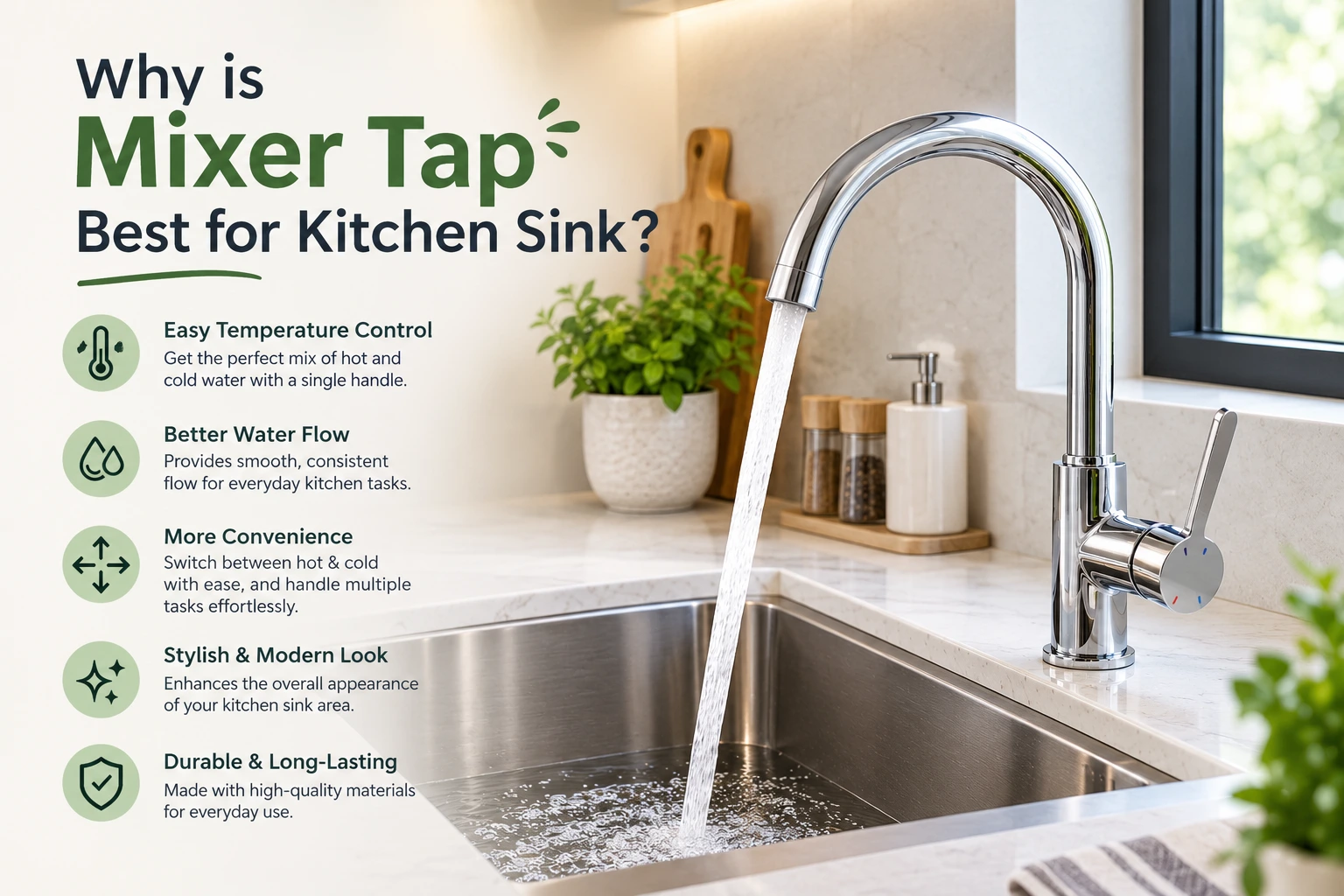
A kitchen tap is used frequently for washing vegetables, utensils, filling containers and cleaning the sink. Choosing the right tap can therefore make everyday kitchen tasks more convenient.
A mixer tap for kitchen sink combines hot and cold water through a single outlet, allowing you to control the water flow and temperature from one fitting. Depending on the design, it may also offer features such as a swivel spout, pull-out spray or high-arc design.
But is a mixer tap always the best option? Not necessarily. The right choice depends on your kitchen sink, countertop space, plumbing arrangement and daily usage.
In this guide, we explain why mixer taps are popular, which kitchen mixer faucet is best, the different types available and what to check before buying one.
What Is a Kitchen Mixer Tap?
A kitchen mixer tap combines hot and cold water supplies and delivers them through a single spout.
Depending on the design, it may have a single lever or separate handles for controlling water flow and temperature.
A single-lever mixer allows you to adjust flow and temperature using one control. Two-handle models provide separate controls for hot and cold water.
The right design depends on your plumbing arrangement, sink configuration and personal preference.
Why Choose a Mixer Tap for Your Kitchen Sink?
Mixer taps are popular because they offer convenient water control and are available in designs suited to different kitchen layouts.
Easy Temperature Control
One of the main advantages of a mixer tap is the ability to adjust hot and cold water through the same outlet.
This can be useful when you need water at a particular temperature for washing utensils or other kitchen tasks.
Convenient One-Hand Operation
Single-lever mixer taps can generally be operated with one hand.
This is useful when your other hand is occupied with a utensil, vegetable, container or other kitchen item.
Practical for Everyday Kitchen Use
A mixer tap provides hot and cold water through one fitting, helping keep the sink area organised.
It can also be easier to operate than separate hot and cold taps, depending on the design.
Different Designs for Different Sinks
Kitchen mixer taps are available in various designs, including standard, swivel, high-arc, pull-out and pull-down styles.
This makes it possible to select a tap according to the size and configuration of your kitchen sink.
Flexible Water Coverage
A swivel or flexible-spout mixer tap can provide greater movement around the sink.
This can be particularly useful with larger sinks or double-bowl configurations.
Suitable for Modern Kitchens
Mixer taps are available in different shapes, sizes and finishes, making it easier to coordinate the tap with your kitchen sink and overall kitchen design.
However, appearance should not be the only deciding factor. Compatibility and functionality are equally important.
Which Kitchen Mixer Tap Is Best?
There is no single kitchen mixer tap that is best for every kitchen.
The right choice depends on:
- Kitchen sink size
- Sink configuration
- Available countertop space
- Tap-hole arrangement
- Spout height
- Spout reach
- Swivel range
- Water pressure
- Hot and cold water connections
- Installation requirements
- Everyday usage
For example, a compact sink may not require a large high-arc tap, while a larger double-bowl sink may benefit from greater spout reach or swivel movement.
Before purchasing, compare the tap dimensions and specifications with your sink and countertop.
Types of Mixer Tap Best for Kitchen
Different mixer tap designs provide different levels of convenience.
Single-Lever Mixer Tap
A single-lever mixer uses one control to adjust water flow and temperature.
It can be a practical option for users who prefer simple, one-hand operation.
One-Handle Mixer Tap
One-handle mixer taps have a combined control for hot and cold water.
They can suit kitchens where separate temperature controls are preferred or where a more traditional design is desired.
Swivel Spout Mixer Tap
A swivel spout can move from side to side, providing greater flexibility around the sink.
This can be useful for Double-bowl sinks where water needs to reach different sections.
Pull-Out Kitchen Mixer Tap
A pull-out tap has a detachable spray head that can be extended from the main spout.
It can make rinsing vegetables, utensils and different areas of the sink more convenient.
Pull-Down Kitchen Mixer Tap
A pull-down design uses a spray head that pulls downward from the tap.
It can be useful for deeper sinks and tasks that require more controlled water direction.
High-Arc Kitchen Mixer Tap
A high-arc tap provides additional clearance below the spout.
This can be useful when washing larger utensils or filling tall containers.
3-Inlet Kitchen Faucet for Hot, Cold & RO Water
This versatile faucet features separate hot/cold and RO water handles, alongside a separate dedicated inlet for Reverse Osmosis (RO) water- leaving no chance of mixing, providing you with convenient access to purified water directly from your kitchen tap.
Foldable Pot Filler Style Kitchen Sink Faucet
This sink-mounted mixer faucet features a foldable 360° rotating swing arm design for maximum flexibility, extended reach, and efficient space saving.
Which Type of Tap Is Best for Kitchen Sink?
The best tap type depends on how the sink is used.
| Tap Type | Suitable For | Main Advantage |
| Single lever | Everyday kitchens | Easy flow and temperature control |
| Two handle | Traditional setups | Separate controls |
| Swivel spout | Single or double bowls | Wider movement |
| Pull-out | Flexible washing | Extended spray reach |
| Pull-down | Deep sinks | Directed water flow |
| High-arc | Large utensils | More clearance |
| 3-inlet | Everyday kitchens | Convenient access |
| Foldable | Large Sink | Extended reach and space saving |
For a compact kitchen, a simple single-lever mixer may be sufficient. For a larger or double-bowl sink, a swivel or flexible design may provide additional convenience.
How to Choose the Best Mixer Tap for Your Kitchen Sink
1. Check Sink Compatibility
Before buying a mixer tap, check whether its mounting arrangement matches your sink or countertop.
The number and position of tap holes can affect which models can be installed.
2. Consider Spout Height and Reach
The spout should provide enough clearance for your regular kitchen tasks.
A tap that is too short may not cover the required washing area, while an unnecessarily large tap may not suit a compact sink.
3. Check the Swivel Range
If you have a double-bowl sink, an appropriate swivel range can make it easier to direct water toward different sections.
4. Consider Water Pressure
Some spray or flexible tap designs may have specific operating requirements.
Check the manufacturer’s product specifications before purchasing.
5. Check Material and Construction
Look at the product specifications for the tap’s material and construction.
Do not choose a tap only because of its appearance. The construction, internal components and finish should also be considered.
6. Choose a Suitable Finish
Kitchen mixer taps are available in different finishes.
Choose one that complements your kitchen sink and surrounding fittings while considering how easy the surface is to maintain.
7. Check Installation Requirements
Before ordering, check the installation instructions and connection requirements.
If you are replacing an existing tap, confirm the plumbing and mounting arrangement before selecting a new model.
Mixer Tap vs Separate Kitchen Taps
Both mixer taps and separate hot and cold taps can work in a kitchen, but their operation is different.
| Feature | Mixer Tap | Separate Hot/Cold Taps |
| Water control | Combined through one fitting | Separate fittings |
| Temperature adjustment | Through mixer controls | Separate hot/cold controls |
| One-hand operation | Available with single-lever models | Generally less convenient |
| Design options | Multiple modern designs | Traditional and simple designs |
| Installation | Depends on model and plumbing | Depends on existing setup |
A mixer tap can be a convenient option when the plumbing and sink configuration support it. When replacing an existing tap, always check compatibility first.
What to Check Before Buying Kitchen Mixer Tap (faucet)
Use this checklist before making your purchase:
☐ Sink or countertop mounting compatibility
☐ Tap-hole arrangement
☐ Spout height
☐ Spout reach
☐ Swivel range
☐ Water pressure requirements
☐ Hot and cold water connections
☐ Material and construction
☐ Finish
☐ Installation requirements
☐ Product dimensions
☐ Warranty or product support, where applicable
Checking these details before purchasing can help avoid compatibility and installation problems.
Common Mistakes When Choosing Kitchen Mixer Tap
Many buyers focus mainly on the appearance of a tap and overlook practical requirements.
Choosing Without Measuring the Sink
The tap should be suitable for the sink’s size and configuration.
Ignoring Tap-Hole Compatibility
Not every mixer tap will fit every sink or countertop arrangement.
Choosing a Spout With Insufficient Reach
A short spout may not cover the required washing area.
Ignoring Double-Bowl Coverage
For double-bowl sinks, check whether the tap can adequately cover both sections.
Buying Only Based on Appearance
Finish and design matter, but specifications and compatibility should come first.
Not Checking Installation Requirements
Confirm the connection and mounting requirements before purchasing.
Is Mixer Tap Suitable for Every Kitchen Sink?
No. A mixer tap is not automatically suitable for every kitchen sink.
Its compatibility depends on the sink or countertop mounting arrangement, available tap holes, plumbing connections, tap dimensions and water supply.
Before purchasing a mixer tap, compare the product specifications with your existing or planned kitchen setup.
FAQs About Kitchen Mixer Taps
What is a mixer tap for a kitchen sink?
A mixer tap combines hot and cold water supplies through one outlet. Depending on the design, it may use a single lever or separate handles to control water flow and temperature.
Why is a mixer tap useful in a kitchen?
A mixer tap can make everyday kitchen tasks more convenient by combining hot and cold water control in one fitting. Certain designs can also provide additional reach or flexibility.
Which kitchen mixer tap is best?
The best mixer tap depends on the sink size, tap-hole arrangement, spout reach, water pressure, plumbing and daily usage. There is no single model suitable for every kitchen.
Which type of tap is best for a kitchen sink?
Single-lever, swivel, pull-out, pull-down and high-arc taps can all be suitable depending on the sink and usage. Choose the type that matches your kitchen’s space and requirements.
Is a single-lever mixer tap good for a kitchen sink?
A single-lever mixer can be convenient because it allows flow and temperature to be adjusted using one control. Check its dimensions and installation compatibility before purchasing.
Are mixer taps suitable for double-bowl sinks?
They can be, particularly when the tap has an appropriate spout reach or swivel range. Always check the actual dimensions and movement of the tap before installation.
What should I check before buying a kitchen mixer tap?
Check the mounting arrangement, tap-hole compatibility, spout height and reach, swivel range, water connections, water pressure requirements, dimensions and installation specifications.
Does a kitchen mixer tap need hot and cold water connections?
A conventional mixer tap is designed to combine hot and cold water supplies. The exact connection requirements depend on the product and plumbing setup.
What is the difference between a kitchen mixer tap and a kitchen faucet?
The terms are often used interchangeably, although “mixer tap” specifically describes a tap that combines hot and cold water through one outlet. The exact terminology can vary by region and product type.
Final Buying Advice
A mixer tap can be an excellent choice for a kitchen sink when its size, mounting type, spout reach, water connections and functionality match the kitchen setup.
Before choosing a kitchen mixer tap, compare the sink dimensions, installation requirements and everyday usage. Selecting the tap based on practical compatibility rather than appearance alone can help create a more convenient kitchen sink area.


