

Blog
Which Sink Is Better, Granite or Stainless Steel?

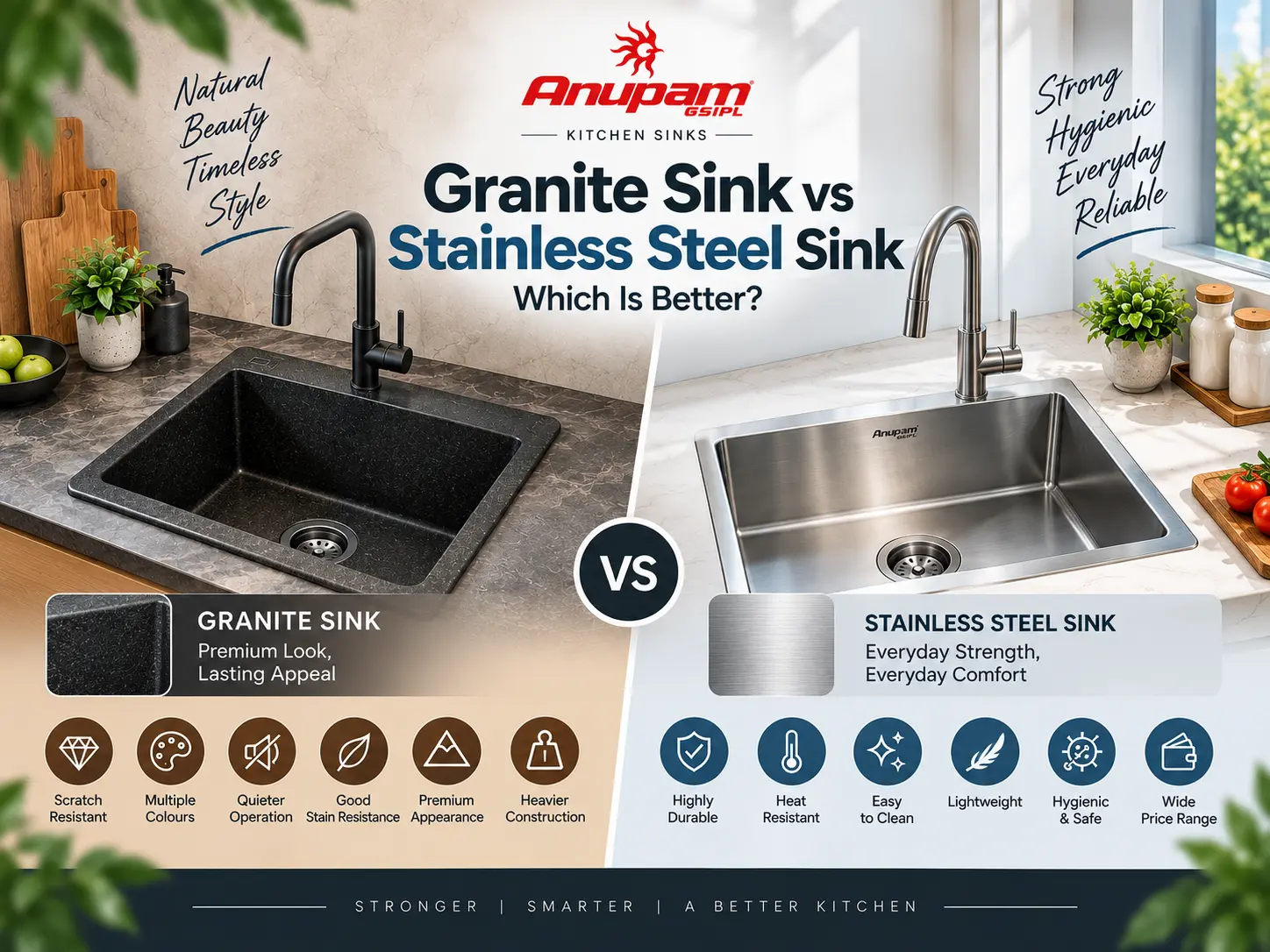
Choosing the right kitchen sink can affect your kitchen’s durability, maintenance, appearance, and everyday convenience. Two popular options are granite composite sinks and stainless steel sinks. But which one is actually better?
For most Indian kitchens, stainless steel is the better all-round sink material because it is durable, hygienic, easy to clean, heat-resistant, lightweight, and suitable for heavy daily use. Granite composite is an alternative if you prioritise scratch resistance, colour options, and a premium stone-like appearance at the risk of strength/durability.
The best choice ultimately depends on your cooking habits, kitchen design, maintenance preferences, and budget.
Granite Sink vs Stainless Steel Sink: Quick Comparison
| Feature | Granite Composite Sink | Stainless Steel Sink |
| Durability | Good | Excellent |
| Scratch resistance | High | Moderate |
| Chipping/cracking | Possible under severe impact | Very unlikely to crack under normal kitchen use |
| Heat resistance | Good* | Excellent |
| Stain resistance | Depends on colour/material | Excellent |
| Cleaning | Easy | Very easy |
| Noise | Quieter | Can be louder |
| Weight | Heavy | Lightweight |
| Colour choices | More | No |
| Appearance | Stone-like | Modern metallic |
| Impact resistance | Good, but hard impacts can chip/crack | Excellent |
| Maintenance | Low–moderate | Low |
| Cost | Usually higher | Wide price range |
| Best for | Premium design | Everyday practicality |
*Heat resistance varies between granite-composite formulations, so always check the manufacturer’s specifications.
What Is a Granite Composite Sink?
A granite composite sink is generally made by combining mineral particles, such as granite or quartz, with a binding material to create a dense, durable surface. Unlike a sink carved entirely from natural granite, composite sinks are manufactured to provide consistent performance, colour, shape, and finish.
Granite kitchen sinks are popular for their stone-like appearance and range of colours, including black, grey, white, and other neutral shades.
Granite Sink Pros and Cons

Advantages of granite composite sinks:
- Scratch resistance
- Premium stone-like appearance
- Multiple colour choices
- Quieter operation
- Good stain resistance
- Solid, substantial construction
Potential disadvantages:
- Heavier than stainless steel
- Usually costs more
- May require suitable cabinet or countertop support
- Mineral deposits can be more visible on some dark finishes
- Cleaning products should be compatible with the manufacturer’s recommendations
Granite sink durability is generally good, but performance depends on the quality of the composite, installation, usage, and maintenance.
What Is a Stainless Steel Kitchen Sink?
A Stainless steel kitchen sink is one of the most practical choices for everyday kitchens. It is durable, corrosion-resistant, lightweight, easy to clean, and capable of handling frequent exposure to water and hot cookware.
Stainless steel sinks are also available in different sizes, bowl configurations, finishes, and installation styles, making them suitable for everything from compact kitchens to large modular kitchens.
What Is a 304 Stainless Steel Sink?
304 stainless steel is a widely used stainless-steel grade for kitchen applications. It offers good corrosion resistance and is well suited to the moisture and regular use associated with kitchen sinks.
However, the steel grade should not be the only factor considered when buying a sink. Construction quality, thickness, finish, drainage, installation, and manufacturer specifications also matter.
What Does Stainless Steel Sink Gauge Mean?
The term gauge is traditionally used to describe the thickness of stainless steel used in a sink. Thickness can influence the sink’s rigidity, sound, and overall feel.
However, gauge alone does not determine sink quality. Buyers should consider the complete construction rather than selecting a sink solely on the basis of a gauge number.
Granite Composite Sink vs Stainless Steel: Which Performs Better?
1. Durability
Both granite composite and stainless steel can provide long-term performance when they are properly manufactured, installed, and maintained. Stainless steel is known to withstand heavy impacts without any cracks whereas granite can chip/crack from hard impacts.
Granite composite has an advantage when it comes to aesthetics, while stainless steel is highly practical for everyday handling of heavy cookware and utensils.
Verdict: Both are durable in their own ways, but stainless steel sink wins in terms of strength and higher durability in comparison.
2. Scratch and Stain Resistance
Granite composite is generally the better choice for scratch resistance.
Granite composite surfaces are able to hide minor marks effectively, while stainless steel can develop scratches through normal use, particularly when heavy utensils are used.
However, scratches on stainless steel do not necessarily mean the sink has failed. Brushed and satin finishes can also make everyday marks less noticeable.
Both materials can show mineral deposits or water marks depending on water quality, colour, finish, and cleaning habits.
3. Cleaning and Maintenance
Stainless steel is generally easier to maintain.
For routine stainless steel sink cleaning:
- Use mild dish soap and a soft sponge.
- Rinse the surface after cleaning.
- Dry the sink to reduce water spots.
- Follow the grain on brushed finishes where applicable.
- Avoid harsh or unsuitable abrasive products.
Granite sink cleaning is also straightforward, but the manufacturer’s care instructions should be followed because different composite materials can have different surface requirements.
Regular cleaning and drying help maintain the appearance of either material.
4. Heat and Heavy Cookware
Stainless steel has an advantage for everyday exposure to hot cookware.
Indian kitchens frequently use pressure cookers, kadhais, tawas, saucepans, and other heavy cookware. Stainless steel is well suited to this type of everyday kitchen environment.
Quality granite composite sinks can also offer strong heat resistance, but performance varies between formulations. Always check the manufacturer’s specifications rather than assuming every granite composite sink has the same heat tolerance.
5. Noise, Weight and Appearance
These three factors create one of the clearest differences between the materials.
Noise — Granite Composite:
The dense composite construction generally provides quieter operation and reduces the sound produced by running water and utensils.
Weight — Stainless Steel:
Stainless steel is considerably lighter, making handling and installation easier in many kitchen applications which is why high steel thickness makes a noticeable difference when it comes to noise absorption and overall quality. Granite composite sinks are heavier and may require appropriate cabinet support.
Appearance — Granite Composite:
Granite composite offers a stone-like, matte appearance and generally provides more colour choices. Stainless steel provides a clean metallic appearance that works particularly well with modern and contemporary kitchens.
Which Sink Is Better for Indian Kitchens?
For many Indian households, the choice comes down to how heavily the sink is used.
Choose Stainless Steel If You:
- Cook frequently
- Use heavy utensils and cookware
- Want easy cleaning
- Prefer low maintenance
- Need a lightweight sink
- Want a versatile design
- Prioritise everyday practicality
Choose Granite Composite If You:
- Prioritise kitchen aesthetics
- Want a stone-like finish
- Prefer black, grey, white, or other colours
- Want stronger scratch resistance
- Prefer quieter operation
- Are comfortable with a heavier sink
For a busy kitchen where washing heavy utensils, pressure cookers, and cookware is part of everyday life, stainless steel is often the more practical option.
What Is the Best Kitchen Sink Material?
There is no single best kitchen sink material for every home. The right material depends on your priorities.
| Priority | Better Choice |
| Everyday use | Stainless steel |
| Heavy cookware | Stainless steel |
| Easy cleaning | Stainless steel |
| Scratch resistance | Granite composite |
| Premium appearance | Granite composite |
| Quiet operation | Granite composite |
| Lightweight construction | Stainless steel |
| Overall versatility | Stainless steel |
For most homeowners looking for a practical, durable, and easy-to-maintain sink, stainless steel is the best all-round kitchen sink material. Granite composite is an excellent alternative when design, colour, scratch resistance, and quieter operation are more important.
Granite vs Stainless Steel Kitchen Sink: Final Verdict
So, which is better, granite or stainless steel sink?
For most Indian kitchens, stainless steel is the better overall choice because it combines durability, easy maintenance, heat tolerance, lightweight construction, and versatility. It is particularly practical for households that regularly use heavy cookware and need a sink for frequent daily washing.
A granite composite sink can be the better option if your priorities are a premium stone-like appearance, colour choices, scratch resistance, and quieter operation.
When choosing a stainless steel kitchen sink, consider the material grade, construction, thickness, finish, bowl size, drainage, installation requirements, and manufacturer quality. Anupam Sinks focuses on stainless steel kitchen solutions designed around practical everyday kitchen requirements, making material quality and functional design important considerations when selecting your sink.
Frequently Asked Questions
Q1. Which is better, granite or stainless steel sink?
For most kitchens, stainless steel is the better all-round choice because it is durable, easy to clean, lightweight, and suitable for heavy daily use. Granite composite is preferable when scratch resistance, quieter operation, colour options, and a premium stone-like appearance are higher priorities.
Q2. Is granite composite better than stainless steel?
Granite composite is better in some areas, particularly scratch resistance, noise reduction, and colour variety. Stainless steel is generally better for lightweight construction, easy maintenance, heat handling, and everyday practicality. The better material depends on how you use your kitchen sink.
Q3. Which sink material is most durable?
Both quality granite composite and stainless steel sinks can be highly durable. Stainless steel is particularly practical for heavy everyday use which is beneficial for Indian kitchens, while granite composite generally offers stronger resistance to surface scratches. Proper installation, cleaning, and maintenance also have a major effect on long-term performance.
Q4. Which sink is easier to clean?
Stainless steel is generally easier to clean and maintain. Mild dish soap, a soft sponge, rinsing, and regular drying are usually sufficient for everyday care. Granite composite is also relatively easy to maintain, but cleaning products should be selected according to the manufacturer’s recommendations.
Q5. Does a granite sink scratch easily?
Granite composite sinks generally have good scratch resistance and are designed to withstand everyday kitchen use. However, no sink surface should be considered completely scratch-proof. Proper cleaning methods and avoiding unsuitable abrasive materials can help maintain the finish.
Q6. Does stainless steel sink scratch easily?
Stainless steel can develop scratches through normal kitchen use, particularly from heavy utensils and abrasive cleaning materials. Minor scratches are a normal part of stainless steel sink use and can become less noticeable over time, especially on brushed or satin finishes.
Q7. Which sink is better for heavy cookware?
Stainless steel is generally the more practical choice for heavy cookware. It is lightweight, durable, and well suited to frequent handling of pressure cookers, kadhais, tawas, and other kitchen utensils commonly used in Indian cooking.
Q8. What is a 304 stainless steel sink?
A 304 stainless steel sink is made using a widely used stainless-steel grade known for good corrosion resistance and suitability for kitchen environments. When comparing sinks, buyers should also consider thickness, construction, finish, drainage, installation, and the manufacturer’s specifications.