

Blog
Kitchen Sink Bowl Radius Explained: Tight Radius vs Zero Radius Sinks

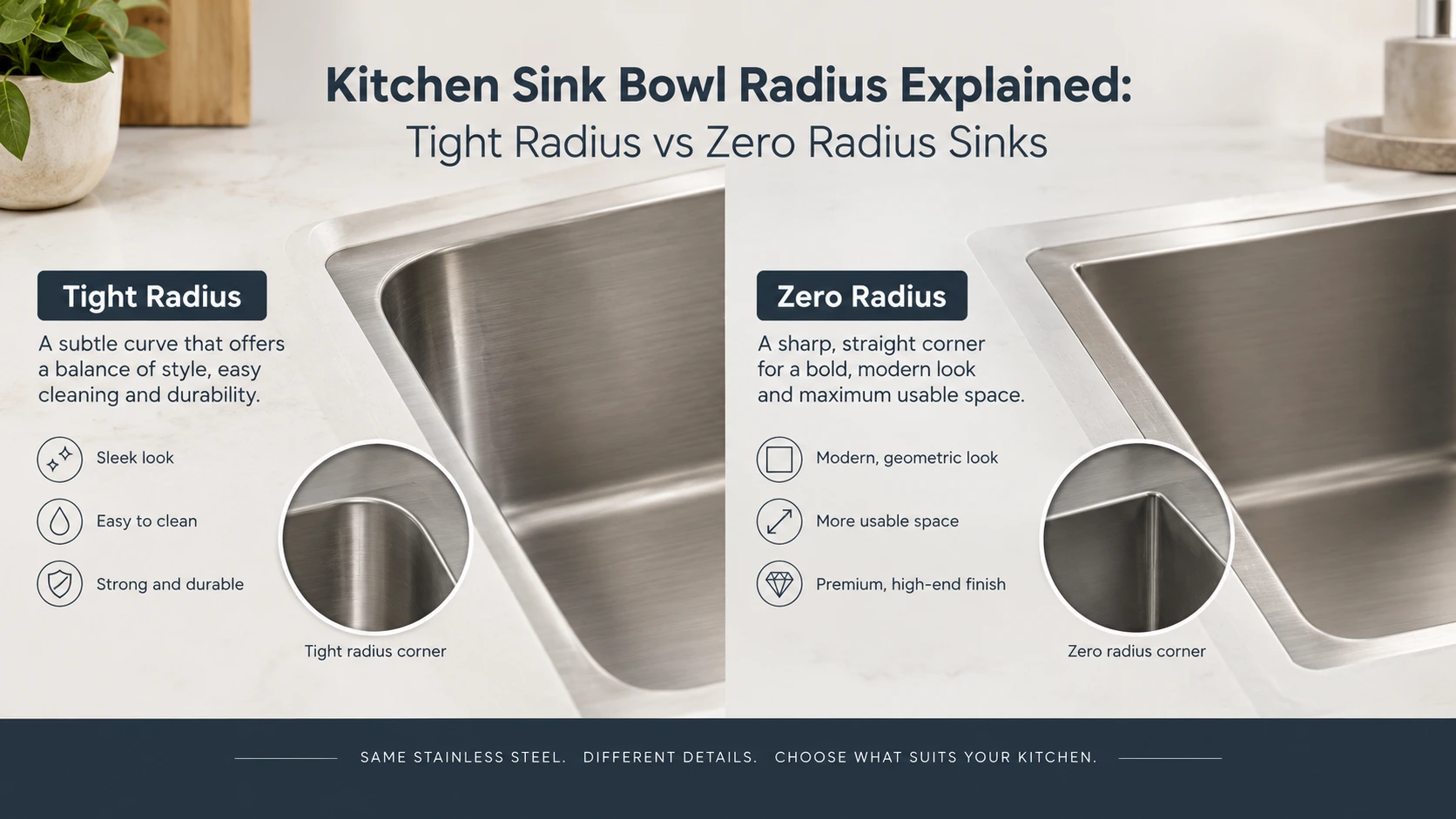
Kitchen Sink Bowl Radius Explained: Tight Radius vs Zero Radius Sinks
When choosing a stainless steel kitchen sink, most buyers compare size, bowl configuration, depth, material and finish. But there is another specification that can significantly affect the sink’s appearance and everyday usability: bowl radius.
You may have seen terms such as tight radius, small radius or zero radius kitchen sink while comparing modern stainless steel sinks. These terms describe how sharply the corners of the sink bowl are formed.
At first, the difference may look purely cosmetic. In reality, the corner profile can influence the visual character of the sink, the amount of usable space inside the bowl and how easily you can clean the corners.
So, what is the difference between a tight radius and zero radius sink? And which one should you choose for your kitchen?
Let’s break it down.
What Is a Kitchen Sink Bowl Radius?
The kitchen sink bowl radius refers to the curve at the corners where the bottom and sides of the sink meet.
A larger radius creates a more visibly rounded corner. A smaller radius creates a sharper, more defined corner.
In simple terms:
Larger radius = more rounded corner
Smaller radius = sharper corner
Zero radius = very sharp, square-style corner
The exact geometry can vary between manufacturers and sink models, so the term should be understood as a description of the corner profile rather than a universal measurement that is identical across every brand.
Radius is particularly noticeable in modern rectangular stainless steel sinks, where straight edges and defined corners are part of the overall design.
What Is a Tight Radius Kitchen Sink?
A tight radius kitchen sink has corners that are sharply defined but still have a small amount of curvature.
It sits between a traditionally rounded sink and an extremely square zero-radius design.
The small curve can make the corners feel less abrupt while retaining the clean, modern appearance associated with contemporary stainless steel sinks.
Key Characteristics of Tight Radius Sinks
A tight-radius design generally offers:
- Modern rectangular appearance
- Sharper internal corners than traditional rounded sinks
- Slight curvature at the corners
- Good usable bowl space
- A balance between appearance and practicality
- Compatibility with many modern kitchen styles
For homeowners who want a contemporary sink without completely square internal corners, a tight-radius design can be a practical middle ground.
What Is a Zero Radius Kitchen Sink?
A zero radius kitchen sink is designed with extremely sharp, square-style internal corners.
Instead of a noticeable curve, the corners appear almost like a 90-degree meeting point between the sink walls.
This creates a very clean and geometric appearance.
Zero-radius sinks are commonly associated with modern stainless steel sink designs, and current product ranges in the market include both zero-radius and tight-radius options across different sizes and installation styles.
Key Characteristics of Zero Radius Sinks
A zero-radius design is generally recognised for:
- Very sharp internal corners
- Strong rectangular appearance
- Contemporary styling
- Efficient use of the bowl’s internal footprint
- A distinctive architectural look
The sharper geometry can also make the internal bowl appear more spacious compared with a heavily rounded design of similar external dimensions.
Tight Radius vs Zero Radius: What’s the Difference?
The main difference is the amount of curvature at the sink’s internal corners.
| Feature | Tight Radius Sink | Zero Radius Sink |
| Corner shape | Slightly rounded | Very sharp/square |
| Appearance | Modern and softened | Minimal and geometric |
| Internal corners | Small curve | Extremely sharp corners |
| Visual style | Contemporary | More architectural |
| Cleaning | Generally easier around corners | Corners may require more attention |
| Usable bowl space | Good | Can maximise the practical internal footprint |
| Best for | Balanced design and practicality | Strong modern styling |
This does not mean that one is universally better than the other. The better choice depends on your priorities, kitchen design and cleaning preferences.
Why Does Sink Bowl Radius Matter?
The radius becomes important because the corner shape affects more than just appearance.
1. It Changes the Look of the Sink
A sink with rounded corners has a softer visual appearance.
A tight-radius sink looks more contemporary while still retaining some curvature.
A zero-radius sink has the sharpest and most structured appearance.
If your kitchen uses straight cabinet lines, minimal hardware and modern finishes, sharper sink corners can complement that overall design language.
2. It Affects Usable Bowl Space
Corner geometry can influence how much of the bowl’s footprint is practically usable.
Rounded corners occupy some of the internal area with curvature. Sharper corners allow the bowl to retain more of its rectangular form.
This can be useful when washing large utensils, trays or cookware.
Anupam’s current handmade range includes different single- and double-bowl configurations in sizes such as 24×20, 30×20, 34×20 and larger formats, showing why internal bowl geometry matters alongside overall sink dimensions.
3. It Affects Cleaning
The shape of the corners can also influence how easily food particles, water and residue can be removed.
A tight radius provides a small curve that can make corner cleaning more straightforward than a very sharp corner.
A zero-radius design can look extremely clean and modern, but its sharper corners may require more attention during routine cleaning.
That does not mean a zero-radius sink is difficult to maintain. It simply means that the corner profile should be considered when choosing a sink for everyday use.
Is a Zero Radius Sink Harder to Clean?
This is one of the most common questions about sink radius.
The answer depends on the specific design and how the sink is used.
Very sharp corners can provide less rounded surface area, so food particles or residue may be more noticeable in the corners if the sink is not rinsed regularly.
A tight-radius sink introduces a small curve, which some users may find more convenient for routine cleaning.
However, sink construction, surface finish, drainage design and everyday maintenance also matter. Radius alone should not be used to judge the overall ease of cleaning.
A well-designed sink should drain properly and be easy to rinse after normal kitchen use.
Which Is Better: Tight Radius or Zero Radius?
There is no single answer for every kitchen.
The right option depends on what you value most.
Choose a Tight Radius Sink If:
A tight-radius design may suit you if you want:
- A modern sink with slightly softened corners
- Easier corner cleaning
- A balance between sharp styling and practicality
- A contemporary look without completely square corners
- A sink suitable for everyday family cooking
Choose a Zero Radius Sink If:
A zero-radius design may be worth considering if you prefer:
- Very sharp and clean lines
- A minimalist kitchen appearance
- Strong geometric styling
- Maximum rectangular visual space inside the bowl
- A contemporary or premium-looking sink design
The decision should ultimately be based on the complete sink—not just the radius.
Does Sink Material Matter More Than Radius?
Yes, radius is only one specification.
For a stainless steel kitchen sink, you should also consider:
- Stainless steel grade
- Bowl thickness
- Overall dimensions
- Bowl depth
- Installation type
- Drain position
- Number of bowls
- Surface finish
- Drainage design
- Cabinet compatibility
For example, a well-designed sink with suitable stainless steel construction, appropriate thickness and effective drainage may be more important for long-term satisfaction than choosing between two similar corner profiles.
If you are comparing different stainless steel models, you can explore Anupam’s broader stainless steel kitchen sink collection after deciding which dimensions and configuration suit your kitchen.
Does Radius Affect Sink Size?
Radius does not replace the overall dimensions of the sink.
A sink might have the same external length and width as another model while having a different internal corner profile.
For example, two sinks may both measure 30 × 20 inches, but their internal bowl geometry may differ.
That can change the amount of usable space inside the bowl.
Therefore, when comparing sinks, check both:
Overall dimensions + Bowl dimensions + Radius
rather than relying only on the external size.
Tight Radius vs Zero Radius for Large Utensils
If you regularly wash large Indian cookware, the usable bowl area becomes particularly important.
Pressure cookers, kadhais, large pans and baking trays can occupy significant space inside the sink.
A sharper internal design can make better use of the rectangular bowl footprint, but the actual usability still depends on the sink’s length, width and depth.
For example, Anupam currently offers handmade single-bowl models with deep bowls, including a 30×20-inch model designed around a larger washing space.
So, instead of choosing a sink simply because it is labelled “zero radius,” compare the actual bowl dimensions and depth with the utensils you normally wash.
Is Tight Radius Better for Everyday Kitchens?
For many homeowners, a tight-radius sink can provide a comfortable balance.
It offers the modern appearance of sharper corners while retaining a small amount of curvature.
This can be particularly suitable when the priority is a combination of:
- Modern design
- Practical cleaning
- Good bowl space
- Everyday usability
But again, there is no universal winner.
A homeowner who strongly prefers minimalist, square geometry may prefer zero radius, while another may prefer the slightly softer corner of a tight-radius design.
What Should You Check Before Buying a Radius-Based Sink?
Before choosing between tight radius and zero radius, check these specifications:
- Overall Sink Size: Make sure the sink fits your countertop and cabinet.
- Bowl Size: Check the actual internal dimensions rather than only the external measurements.
- Bowl Depth: A deeper bowl can be useful for larger utensils but requires adequate cabinet and plumbing clearance.
- Stainless Steel Grade: Check the specified stainless steel grade and product construction.
- Thickness: Compare the bowl thickness rather than assuming all stainless steel sinks are constructed in the same way.
- Installation Type: Confirm whether the sink is designed for undermount, top-mount or another installation method.
- Drain Position: The drain location should work with your kitchen’s plumbing arrangement.
- Cleaning Requirements: Think realistically about how much time you want to spend cleaning the corners and bottom of the sink.
Are Zero Radius Sinks Only for Modern Kitchens?
Not necessarily.
Although zero-radius sinks naturally complement modern and minimalist interiors, the sink’s overall size, finish, installation style and countertop can influence how it looks.
A stainless steel sink with sharp geometry can work with different kitchen designs when the overall combination is planned properly.
Similarly, a tight-radius sink does not have to be limited to one particular interior style.
The important factor is how the sink fits into the complete kitchen rather than the radius alone.
How to Choose the Right Bowl Radius for Your Kitchen
A simple way to decide is to start with your priorities.
If appearance is your top priority:
Consider the sharper geometry of a zero-radius design.
If you want a balance between modern appearance and practical cleaning:
A tight-radius sink may be more suitable.
If you regularly wash large cookware:
Focus on actual bowl dimensions and depth in addition to radius.
If easy maintenance is important:
Look at corner geometry, drainage and surface finish together.
If you are replacing an existing sink:
Check dimensions, cutout and installation requirements before selecting the radius.
You can also explore handmade kitchen sinks where the construction, bowl configuration and dimensions can be compared according to your kitchen requirements. Anupam’s current handmade collection includes both single- and double-bowl models in multiple sizes.


